Last updated on April 5th, 2026 at 10:14 am
What Does WTW Mean in Text is a common question people ask when they see this short slang popping up in chats and social media. In today’s fast-paced digital world, WTW shows up everywhere, and understanding it helps you reply faster and stay confident in conversations. This intro will guide you clearly so you know exactly what WTW means and how to use it naturally.
Whether you’re texting friends, replying on Instagram, or navigating online chats, knowing what does WTW mean in text saves you from confusion. This article breaks down its meaning, usage, and real examples so you never feel lost again. Get ready to learn how WTW works and why it’s becoming a popular part of modern texting.
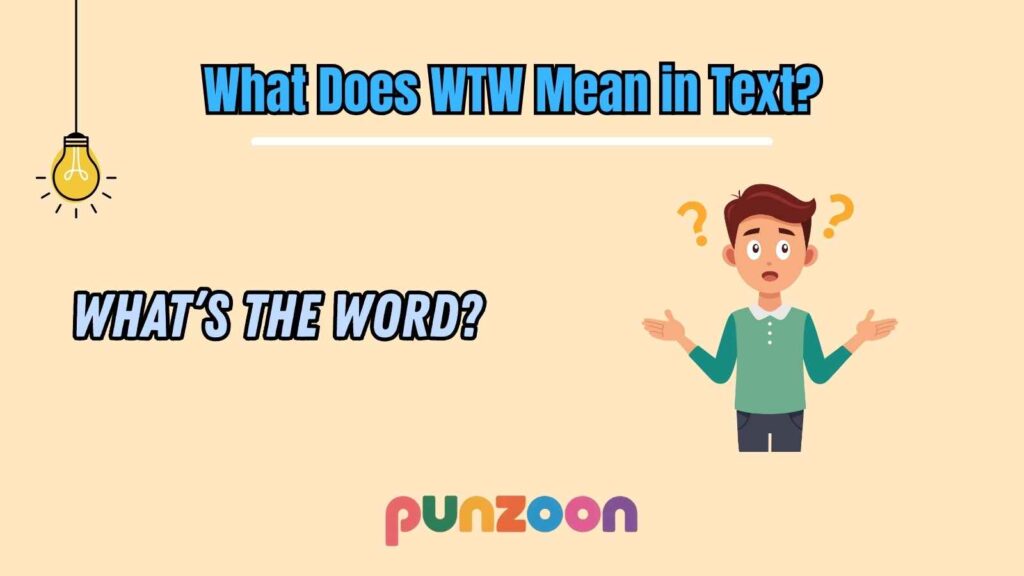
What Does WTW Mean in Text?
WTW stands for “What’s the word?”
In everyday texting, it’s a simple way to ask:
- What’s going on?
- What are you doing?
- Any updates?
- What’s the plan?
It’s short, casual, and direct. People use it when they want to start a conversation, check in, or see if someone is free.
While the acronym looks basic, its tone varies wildly depending on the sender and context. Sometimes it’s friendly, sometimes flirty, and sometimes it’s a soft invitation to hang out.
Where WTW Comes From: Origins + Modern Usage Shift
The phrase “What’s the word?” originally appeared in early urban slang and hip-hop culture. It spread through communities as a quick way to ask about news, plans, or updates.
As texting became the dominant communication style, long phrases shrank into acronyms. WTW naturally evolved because it’s:
- Fast to type
- Easy to understand
- Versatile in meaning
- Casual enough for everyday messages
Today, you’ll see WTW mostly on:
- Instagram DMs
- Snapchat
- TikTok comments
- WhatsApp messages
- iMessage
- Discord chats
Anywhere people talk quickly, WTW thrives.
How WTW Functions in Real Conversations
WTW is a conversation starter, a check-in, and a vibe detector all at once. It helps the sender:
- Gauge interest
- Break the silence
- Start a plan
- See if the other person wants to talk
Because it’s open-ended, WTW can spark almost any direction in conversation. That flexibility is what makes it so widely used.
Why People Prefer “WTW”
People use WTW instead of longer phrases because:
- It’s faster
- It’s neutral
- It doesn’t pressure the recipient
- It keeps the conversation light
- It sounds modern
For people flirting, it’s low-effort but keeps the door open. For friends, it’s a reminder that they’re thinking of you.
WTW Meaning in Different Social Contexts
Even though WTW has one main definition, its tone changes based on who sends it. Below is a breakdown of how it works in each setting.
WTW in Friendly Check-Ins
When used between friends, WTW simply means “What are you up to?”
You’ll see it when someone wants:
- A quick update
- Casual conversation
- A relaxed hangout
Examples:
- “WTW, you free later?”
- “WTW today? Trying to chill.”
This version feels warm, simple, and honest—no hidden meaning.
WTW in Flirting, Interest, and Dating
Things shift dramatically in flirting.
When someone you like texts WTW, they might be saying:
- “I want to see you.”
- “I miss talking to you.”
- “Are you free tonight?”
- “I’m thinking of you.”
Flirty examples:
- “WTW tonight? 👀”
- “WTW you seem quiet today.”
If they use emojis, punctuation, or timing, the subtext becomes even stronger.
WTW in Group Plans or Social Coordination
In group chats, WTW is used as an organizing phrase. It means:
- “What’s happening with the plan?”
- “Are we still meeting?”
- “What’s the move?”
It signals momentum—like someone is ready to lock things in.
Group example:
- “WTW for the weekend? Pick a spot.”
WTW for Catching Up After a Long Pause
When someone texts WTW after days or weeks of silence, it’s usually a friendly nudge.
They’re saying:
- “How have you been?”
- “Let’s reconnect.”
This often comes from old friends, acquaintances, or someone easing back into conversation.
Text Examples: What WTW Looks Like in Real Chats
Here’s a table to make things clearer.
| Situation | Real Example | Meaning |
|---|---|---|
| Friendly | “WTW, need a break from work?” | Casual check-in |
| Flirty | “WTW tonight? 😉” | Wants to see you |
| Busy Friend | “WTW, you alive?” 😂 | Playful check-in |
| Group Plans | “WTW for Friday?” | Finalizing plans |
| Reconnecting | “Hey, WTW lately?” | Catching up |
These examples show how tone and intention shape the meaning.
Alternatives to WTW (Sorted by Tone + Use Case)
Sometimes WTW isn’t appropriate—or you want a more precise phrase. Here are options sorted by tone.
Friendly & Polite Alternatives
- “What’s going on?”
- “What are you up to?”
- “How’s your day going?”
- “Everything good?”
- “How’ve you been?”
Professional or Work-Safe Alternatives
- “Any updates?”
- “What’s the status?”
- “Is there news on this?”
- “Where do we stand?”
- “What’s the latest?”
Casual Yet Respectful Alternatives
- “What’s the plan?”
- “You doing anything?”
- “What’s happening?”
- “Anything fun going on?”
Choosing the Right Alternative: Tone, Intent, and Relationship
Tone matters. Your wording sends a signal about your intent.
Use casual alternatives when:
- You’re talking to close friends
- The conversation is already relaxed
Use professional alternatives when:
- You’re talking to a coworker
- You need clarity
- The topic is work-related
Try polite alternatives when:
- You’re not close to the person
- You want to keep things respectful
- You don’t want to sound too direct
A quick rule of thumb:
The newer the relationship → the more polite your wording should be.
Why “WTW” Usually Doesn’t Belong in Professional Settings
Using WTW at work can create misunderstandings. It sounds informal, vague, and unprofessional.
Risks include:
- Sounding unclear
- Coming off as too casual
- Creating confusion about deadlines
❌ Bad example in a work email:
“Hey, WTW with the report?”
Why this is bad:
It’s ambiguous and mismatched for a professional environment.
✅ Better alternative:
“Hi, any updates on the report? Let me know if you need anything from me.”
Clear. Direct. Respectful.
20 Smart Replies to “WTW” for Every Mood
Casual Replies
- “Just chilling, you?”
- “Nothing much, what’s up?”
- “Trying to relax. You?”
- “Bored honestly, hbu?”
- “Just got home. Wbu?”
Flirty or Lighthearted Replies
- “Thinking about you.”
- “Depends… what you offering?” 😉
- “Missing your face, that’s what.”
- “Trying to see you.”
- “Looking for trouble. You in?” 😏
Polite or Professional Replies
- “All good here. What can I help with?”
- “I’m working on a project. What’s going on?”
- “Busy at the moment. What’s up?”
- “Handling tasks. Any updates?”
- “Doing well. What do you need?”
Confident, Playful, or Witty Replies
- “Better question… WTW with YOU?”
- “Plotting world domination.”
- “Trying to survive adulthood.”
- “Just vibing. You?”
- “Recovering from life.”
Emotional Tone Breakdown: What “WTW” Really Communicates
Tone changes everything. Let’s break it down.
Friendly Tone
A friend checking up on you without any deeper meaning.
Curious or Engaging Tone
The sender wants a conversation. They’re ready to talk.
Romantic or Flirty Tone
They want your attention, time, or presence.
Indirect Invitation Tone
They’re hinting at meeting up without directly asking.
Responding Based on Who Sent It: Real Scenarios
Close Friend
Friendly, open replies work well:
- “Just chilling, come through.”
- “Trying to get food. You down?”
Romantic Interest
Lean into the vibe a little:
- “Nothing yet, but I’m free later.”
- “Trying to see you actually.”
Coworker (Informal Setting)
Keep it safe:
- “Working at the moment. You need something?”
Stranger or New Acquaintance
Be polite but cautious:
- “Hi! Not much. How can I help you?”
Should You Use WTW? A Yes-or-No Guide
Use WTW if:
- You’re talking to friends
- You’re flirting
- You want casual conversation
- You’re checking in
Avoid WTW if:
- You’re messaging your boss
- You’re writing emails
- You’re in a formal situation
- You need clarity or details
Quick Decision Table
| Situation | Use WTW? | Why |
|---|---|---|
| Close friend | Yes | Fits the tone |
| Crush | Yes | Opens the door |
| Work chat | No | Too casual |
| Stranger | Maybe | Depends on context |
| Absolutely not | Unprofessional |
Related Slang You’ll See Next to WTW
Here are other abbreviations used in similar conversations.
| Slang | Meaning | When It’s Used |
|---|---|---|
| WYA | Where you at? | Location check |
| WYD | What are you doing? | Conversation starter |
| LMK | Let me know | Planning |
| HBU | How about you? | Follow-up |
| IYKYK | If you know, you know | Shared context |
Understanding these helps you stay in the flow of texting culture.
WTW meaning in Text from A guy
When a guy sends “WTW” in a text, he usually means “What’s the word?” or “What’s up?”. It’s a casual way to check in or start a conversation. Guys often use it to see what’s happening or if you’re free to chat. It’s friendly and informal, not romantic by default. The tone can depend on the relationship—you might interpret it differently if it’s a close friend versus someone you’re dating. WTW is common in texting because it’s short and easy to type. People sometimes pair it with emojis to express mood or excitement. Essentially, it’s a modern version of saying “Hey, what’s going on?” in person.
What does WTW mean on Instagram
On Instagram, WTW is often used in direct messages or comments. Most users interpret it as “What’s the word?” or “What’s up?”, just like in texting. It’s a casual greeting to start conversations with friends or followers. Sometimes people use it to check plans, see what someone is doing, or just say hello. Instagram users like short abbreviations, so WTW fits perfectly in DMs. It’s not platform-specific, so it carries the same meaning across posts, stories, or chats. Emojis often follow WTW to add personality or emotion.
WTW meaning Snapchat
On Snapchat, WTW usually stands for “What’s the word?” or “What’s up?”. Snapchat users send it in chat messages or as part of story replies. It’s a casual, quick way to start a conversation. WTW may also be a way to check if someone is online or wants to snap. Like other apps, the tone depends on who is sending it—friends, crushes, or acquaintances. Emojis often accompany it to show friendliness or excitement. It’s one of many short slang terms that make chatting on Snapchat faster.
WTW meaning in text from a girl
When a girl texts WTW, she’s usually asking “What’s up?” or “What’s the word?”. It’s a friendly and casual way to start talking. Depending on context, it can show she’s curious, wants to chat, or is checking in. Some girls might use it playfully or flirty if the conversation is with someone they like. Like texting from anyone, tone and relationship matter. WTW is just shorthand for saying hello and opening the conversation without typing a full sentence. Adding emojis can make it more personal or fun.
What Does WTW Mean on TikTok
On TikTok, WTW is used in comments, captions, or DMs and means “What’s the word?” or “What’s up?”. TikTok users like using slang to keep communication short and trendy. It can be a greeting, a conversation starter, or a way to ask for updates from friends. WTW is not specific to TikTok, but it fits the casual, fast-paced style of the platform. Some creators use it in videos or comments to engage with followers. Emojis are often added for extra tone or humor.
WTW tn meaning in text
When someone writes WTW tn in a text, it usually means “What’s the word tonight?”. The “tn” is short for “tonight.” People use it when making plans or checking if someone is free in the evening. It’s casual and friendly, often sent between friends or acquaintances. This abbreviation keeps the message short while still being clear. It’s commonly seen in texts, Snapchat, and Instagram DMs. Emojis may be added to express excitement or mood.
What does WTW mean on Wizz
On Wizz, a social app for chatting and meeting new people, WTW stands for “What’s the word?” or “What’s up?”. Users send it to start conversations with matches or new friends. It’s casual and friendly, showing interest in chatting without being too formal. Wizz users like short abbreviations to keep messages fast and fun. The meaning doesn’t change much from other platforms. Sometimes WTW on Wizz can indicate someone is open to talking about plans, interests, or just hanging out online.
WTW meaning Urban Dictionary
Urban Dictionary defines WTW as “What’s the word?” or “What’s up?”. It’s an informal greeting used in texts and online messaging. The site also notes that the context can change the tone—it could be friendly, casual, or even flirty. Urban Dictionary highlights that abbreviations like WTW are popular among younger people who prefer texting quickly. Emojis are often paired with WTW to express mood. Overall, it’s a simple, widely recognized slang term for checking in with someone or starting a conversation.
Case Study: How “WTW” Changes Outcomes in Conversation
Case Study #1 – Friendships
A friend texts “WTW?” after work. You reply with “Trying to chill.”
Outcome: You meet up, grab food, maintain your bond.
Case Study #2 – Flirting
Someone you’re interested in messages “WTW tonight?”
You respond, “Trying to see you.”
Outcome: They see that you’re open. A date happens.
Case Study #3 – Miscommunication
A coworker messages “WTW with the report?”
You feel confused, unsure if they’re being rude.
Outcome: The wording creates misunderstanding.
Lesson: Tone matters more than the acronym itself.
Expert Quote to Understand WTW Better
“Modern slang like WTW isn’t just shorthand; it’s social signaling. It shows comfort, tone, and intent in just a few characters.”
FAQs:
What does WTW mean from a guy?
Usually, it means he wants to talk, check in, or see if you’re free.
Is WTW flirty?
It can be, depending on tone, emojis, and timing.
What should I reply to WTW?
Anything from casual to flirty works. Match the sender’s tone.
Is WTW rude?
No, but it can sound abrupt in professional settings.
Can I use WTW with strangers?
You can, but a polite opener may feel safer.
Conclusion:
Understanding what WTW means in text helps you read people better, respond naturally, and control the tone of your conversations. Whether someone’s flirting, checking in, or making plans, the acronym carries emotional signals you can now recognize instantly.
Use it where it fits, replace it when you need more clarity, and let the context guide your vibe. Slang works best when it enhances connection—not when it creates confusion.