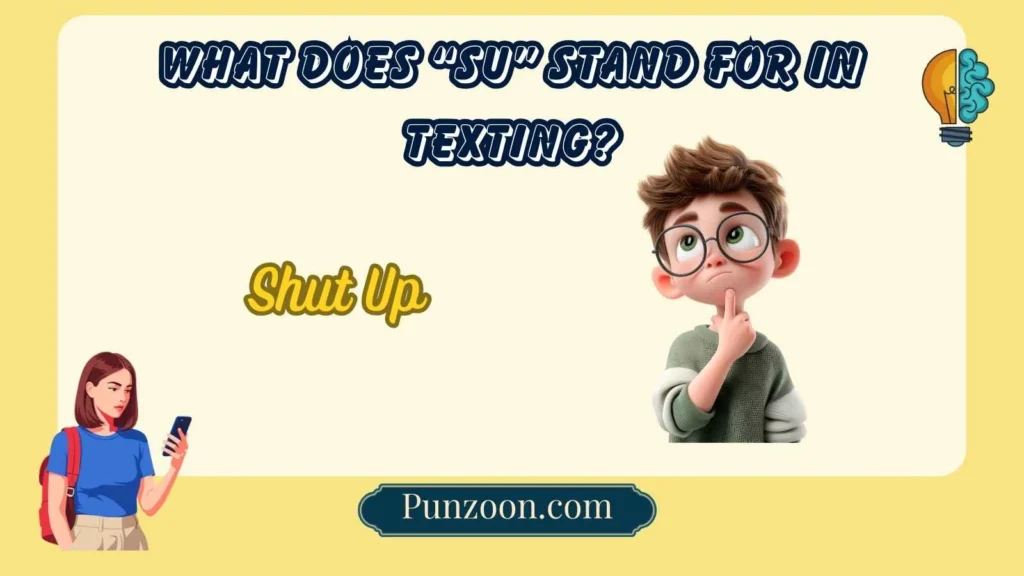
What Does “SU” Stand For in Texting? is a common question for anyone who chats online and suddenly sees this short acronym pop up in messages or DMs. In fast-paced digital conversations, SU is often used as a quick and casual way to keep chats flowing, but its meaning can change depending on the context, tone, and platform.
What Does “SU” Stand For in Texting? usually relates to informal communication, where users prefer shortcuts and slang over full sentences. Understanding what does “SU” stand for in texting helps you avoid confusion, reply confidently, and stay in sync with modern texting trends.
What Does “SU” Stand For in Texting?
In texting and online chat, “SU” most commonly stands for “Shut Up.”
That’s the raw definition. But meaning in texting is rarely that simple.
Depending on context, tone, and relationship, “SU” can range from:
- A joking remark between close friends
- A dismissive or rude response
- A lazy shorthand that skips emotional nuance
Unlike longer phrases, “SU” leaves almost everything open to interpretation. There’s no tone of voice. No facial expression. No explanation. Just two letters dropped into the conversation like a stone in water.
Key point:
“SU” isn’t inherently polite or rude. Its impact depends entirely on how, when, and by whom it’s used.
Where Did “SU” Come From?
The rise of abbreviations like “SU” traces back to early texting culture.
Why shorthand exploded
- Character limits in early SMS
- T9 keyboards made typing slow
- Chat rooms and forums rewarded speed
- Gaming and instant messaging favored quick reactions
Over time, phrases were shaved down to their bare minimum. “Shut up” became “SU.” The problem is that what works in a fast-paced chat doesn’t always work in real conversations.
Shortcuts save time, but they cost clarity.
Is “SU” Polite or Rude?
Most of the time, “SU” sounds rude—especially outside close friendships.
Why? Because it:
- Feels abrupt
- Lacks emotional cushioning
- Can sound commanding or dismissive
Even when no harm is intended, the message can land badly.
When “SU” might feel okay
- Between close friends who joke aggressively
- In playful banter with clear mutual understanding
- When paired with emojis or context that soften it
Example:
“SU 😂 you’re lying”
Here, the emoji and context signal humor.
When “SU” feels rude
- In professional or semi-formal chats
- With people you don’t know well
- During emotional or serious conversations
In these cases, “SU” can feel like a verbal door slam.
Context Changes Everything
Tone in texting doesn’t come from words alone. It comes from signals around them.
Things that shape how “SU” is received:
- Your relationship with the sender
- Previous messages in the thread
- Timing of the message
- Emojis or lack of them
- Platform (work chat vs private DM)
A message that feels funny at midnight with friends can feel offensive at 10 a.m. in a work chat.
Why People Use “SU” Instead of Full Phrases
People don’t usually choose “SU” to be cruel. More often, it’s about convenience.
Common reasons people use “SU”
- Speed: It’s faster than typing full sentences
- Habit: Picked up from group chats or gaming
- Emotional distance: Avoiding deeper engagement
- Social shorthand: Assuming shared understanding
But here’s the catch.
Efficiency doesn’t equal effectiveness.
What saves seconds can cost trust or clarity.
Why You Should Avoid Using “SU” in Many Situations
If your goal is clear communication, “SU” is risky.
Problems with using “SU”
- Sounds lazy or dismissive
- Easy to misinterpret
- Can escalate tension quickly
- Creates a poor impression in professional settings
Think of texting like body language. Saying “SU” is the digital equivalent of waving someone off without looking at them.
Better Alternatives to “SU” Based on Intent
Most people who type “SU” don’t actually mean “be quiet forever.” They usually mean something softer.
Here’s how to say what you mean without sounding harsh.
Polite Alternatives to “SU”
Use these when you want to keep things friendly and respectful.
- “Haha, no way”
- “I don’t think so”
- “Let’s talk about something else”
- “Give me a second”
- “Can we pause this convo?”
These options keep the door open instead of slamming it shut.
Professional Alternatives to “SU”
Never use “SU” at work. Ever.
Better options:
- “Let’s revisit this later”
- “I’d like to stay focused on the task”
- “We can discuss this after the meeting”
- “I’ll follow up shortly”
Professional language signals maturity and control.
Casual or Playful Alternatives
With friends, tone matters more than formality.
- “You’re wild 😂”
- “Stoppp 😄”
- “Chill, I hear you”
- “Okay okay, enough”
These keep humor intact without sounding rude.
How to Choose the Right Phrase Instead of “SU”
Good texting is about reading the room—even when the room is virtual.
Ask yourself:
- Who am I talking to?
- How well do we know each other?
- Is this conversation emotional?
- Would this sound okay out loud?
If it wouldn’t sound good spoken face-to-face, it won’t land well in text.
Tone Signals to Watch For
Tone hides in the details.
Signals that soften messages:
- Emojis 🙂😂
- Exclamation points (used sparingly)
- Friendly openers like “Hey” or “Haha”
Signals that harden messages:
- One-word replies
- All caps
- Abrupt phrasing
“SU” without context usually falls into the second category.
When You Should NOT Use “SU” at All
Some situations demand clarity and care.
Avoid “SU” when:
- Messaging a boss or coworker
- Talking to someone new
- Discussing emotions or conflict
- Responding to serious questions
In these moments, two letters can undo trust fast.
What “SU” Might Mean When Someone Sends It to You
Before reacting, pause. “SU” doesn’t always mean hostility.
Possible meanings
- They’re joking
- They’re distracted
- They don’t know how to respond
- They’re trying to shut down a topic
The safest move is to clarify, not assume.
How to Respond When Someone Texts “SU”
Your response sets the tone going forward.
Casual Responses
If you’re comfortable and know the person well:
- “LOL okay 😂”
- “Fair enough”
- “Haha chill”
Clarifying Responses
If you’re unsure:
- “Did you mean that jokingly?”
- “Everything okay?”
- “What’s up?”
These invite explanation instead of escalation.
Professional Responses
In work settings:
- “Let’s keep this professional”
- “Happy to discuss this later”
- “Please clarify what you mean”
Boundaries matter.
15 Realistic Reply Examples for “SU”
| Situation | Response |
|---|---|
| Joke from friend | “😂 you’re ridiculous” |
| Confusing tone | “Not sure how you meant that” |
| Work chat | “Let’s stay focused” |
| Emotional moment | “That came off harsh” |
| Casual chat | “Okay, moving on” |
These responses redirect without inflaming.
Common Misinterpretations of “SU”
“SU” often causes problems because people assume tone.
Why misunderstandings happen
- Text lacks vocal cues
- Cultural differences in humor
- Generational texting styles
- Platform norms vary
What feels playful to one person can feel insulting to another.
“SU” vs Full Phrases: Does It Really Matter?
Yes. It does.
Why wording choices matter
- Words shape emotional impact
- Small phrases signal respect—or lack of it
- Clear language builds trust
Short doesn’t mean sharp.
You can be brief and kind at the same time.
FAQs:
What does SU mean in texting slang?
It usually means “Shut Up,” but tone and context change how it’s received.
Is SU always rude in text messages?
No. Between close friends, it can be playful. Without context, it often feels rude.
Can SU be used professionally?
No. It’s inappropriate in professional communication and can damage credibility.
How should I respond if SU offends me?
Ask for clarification calmly or state that it came across harsh.
What’s a nicer alternative to SU?
Phrases like “Let’s pause,” “Haha okay,” or “I disagree” work better.
Conclusion:
Language shapes relationships, even in tiny texts. While “SU” in texting might save time, it often creates confusion or tension.
Clear, thoughtful phrasing builds stronger connections and avoids unnecessary misunderstandings.
The best messages sound like something you’d actually say out loud. When in doubt, choose clarity over shortcuts.
Two extra seconds of typing can save a lot of awkward silence later.