What Does STSU Mean in Text? If you’ve come across this abbreviation in a message and felt confused, you’re not alone. In today’s world of text slang, acronyms like STSU are used to communicate quickly and casually. Understanding what STSU means in text can help you avoid misunderstandings and reply with confidence.
In this guide, we’ll break down what STSU means in text, how it’s commonly used, and when you might see it in conversations. Whether you’re navigating social media, chatting with friends, or decoding online messages, knowing what STSU means in text will keep you in the loop and up to date.
What Does STSU Mean in Text Messages?
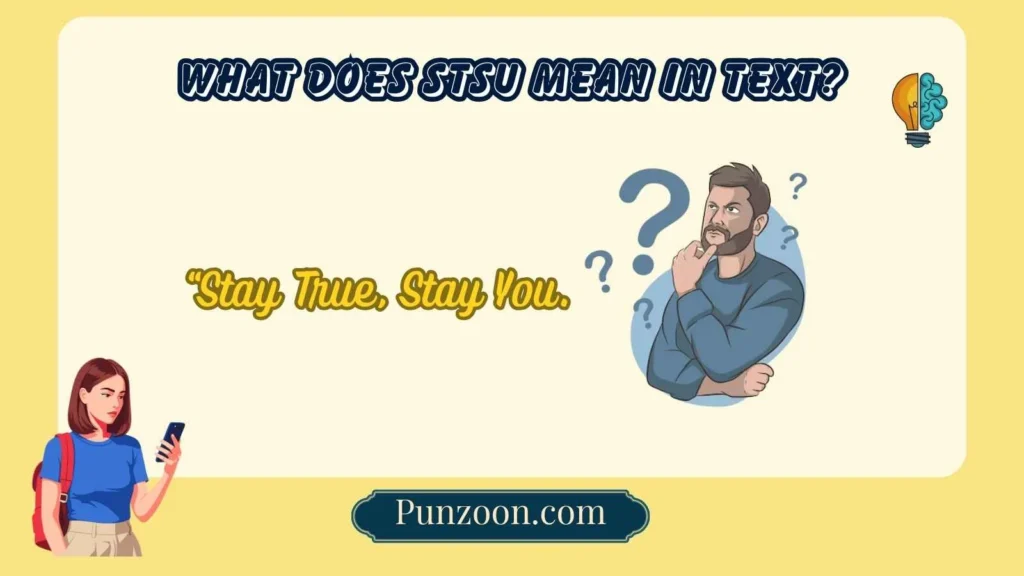
STSU stands for “Stay True, Stay You.” It’s a positive and uplifting message that encourages someone to remain authentic and confident in their identity.
Unlike acronyms like LOL or BRB, STSU isn’t about saving time for casual chatting—it’s about sending emotional support in just four letters. It’s simple, meaningful, and carries a lot of weight when used correctly.
Example in a text:
Friend: I’m nervous about starting my new job tomorrow.
You: STSU! You’ve got this 💪
Here, STSU conveys reassurance, encouragement, and authenticity all in one short message.
What Does “Stay True, Stay You” Actually Imply?
The phrase “Stay True, Stay You” carries a deeper psychological meaning than just a casual compliment. It’s about authenticity, self-confidence, and personal integrity.
- Encouragement vs reassurance: It tells someone it’s okay to be themselves, even if others don’t approve.
- Reinforces identity: Reminds people that their individuality is valuable.
- Emotional weight: Especially impactful during moments of self-doubt or big life changes.
Example scenarios:
- After someone shares personal struggles.
- During a big life decision, like moving to a new city.
- Following criticism or social pressure.
STSU essentially says, “Don’t compromise your true self—your authenticity is your superpower.”
Where STSU Is Most Commonly Used
STSU is not just a random internet trend—it has specific spaces where it thrives:
- Casual texting: Between friends or loved ones during personal conversations.
- Instagram captions/comments: Motivational or empowering posts often include STSU.
- TikTok replies: Especially in videos about self-confidence or individuality.
- Snapchat streaks: Short supportive messages during ongoing chats.
- Group chats: Encouraging someone in a shared conversation.
Example in a post:
“No matter what anyone says, STSU ✨ #BeYourself #Motivation”
By appearing in multiple platforms, STSU has become a universal micro-message of positivity.
Why People Use STSU Instead of Writing It Out
Typing out “Stay True, Stay You” every time can feel cumbersome. STSU provides several advantages:
- Saves time: A four-letter acronym is faster than typing 17 characters.
- Feels modern: Reflects familiarity with online slang and digital culture.
- Creates impact: Short, punchy messages tend to stick.
- Fits character limits: Especially useful on platforms like Twitter or TikTok.
Think of it as digital shorthand for heartfelt encouragement. It’s efficient without losing meaning.
The Tone of STSU — Supportive, Affirming, or Dismissive?
STSU isn’t just about letters—it’s about how you say it. The tone can shift depending on the context:
- Heartfelt: When responding to a friend in need.
- Generic: If used too frequently or out of context.
- Playful: When combined with emojis or memes.
Emoji impact: Adding emojis like ✨, 💪, or ❤️ amplifies the warmth and encouragement. Without them, STSU can feel neutral or even cold.
When You Should Use STSU
Knowing when to use STSU ensures your message is received positively.
Encouraging a Friend
- Boost confidence after criticism or failure.
- Example: “You’re nervous about your presentation? STSU! You’ll nail it 💼”
Celebrating Individuality
- Compliment someone’s unique traits.
- Example: “Love your style, STSU 💖”
Responding to Vulnerability
- When someone shares personal struggles.
- Example: “Thanks for opening up. STSU always 🌟”
STSU is most effective when it aligns with genuine emotional support.
When You Should Avoid Using STSU
Despite being positive, STSU isn’t always suitable.
During Serious Conflict
- Issues require deeper discussion, not a quick acronym.
- Example: Avoid using STSU in arguments or sensitive topics.
In Professional Communication
- Workplace emails, academic feedback, or formal reports are not suitable.
- Example: “Please STSU” in a professional context can feel unprofessional.
When It Might Feel Dismissive
- If someone seeks advice, not reassurance.
- Example: Don’t respond with STSU to someone asking for guidance on a serious issue.
15 Natural Alternatives to STSU
Sometimes, a different phrasing works better depending on tone and context. Here’s a categorized list:
Casual Alternatives
- Be yourself.
- Keep being you.
- Don’t change for anyone.
- You’re solid as you are.
- Own who you are.
Supportive & Encouraging Alternatives
- Your authenticity is your strength.
- Don’t compromise your values.
- Stay grounded.
- Let your true colors show.
- You’re enough.
Professional-Friendly Alternatives
- Remain authentic.
- Stay aligned with your principles.
- Maintain your integrity.
- Lead with who you are.
- Stand firm in your values.
Pro tip: Always match your tone to your relationship and platform.
STSU Compared to Similar Acronyms
To fully understand STSU, it helps to compare it with other acronyms:
| Acronym | Meaning | Tone | Best Used In | Avoid In |
|---|---|---|---|---|
| STSU | Stay True, Stay You | Supportive | Casual, social media | Formal/professional |
| STFU | Shut The F*** Up | Aggressive | Informal joking | Professional/personal sensitivity |
| YOLO | You Only Live Once | Motivational, casual | Social media | Serious life advice |
| SMH | Shaking My Head | Judgmental | Social media, texting | Encouragement |
| IMO | In My Opinion | Neutral | Discussion, online forums | Informal encouragement |
STSU is unique because it conveys positivity and emotional support instead of judgment or opinion.
How to Respond When Someone Texts You “STSU”
Receiving STSU is meant to uplift and affirm. Here’s how to respond:
- Simple appreciation: “Thanks! Means a lot 💛”
- Playful reply: “STSU? Right back at ya 😎”
- Deep acknowledgment: “I’ll try my best to, thanks for reminding me 💫”
The key is to acknowledge the sentiment genuinely, without overthinking it.
Is STSU Still Popular in 2025?
Although slang evolves quickly, STSU remains relevant in 2025:
- Youth culture: Gen Z and Millennials continue to use it.
- Social media presence: Instagram, TikTok, and Twitter reinforce its usage.
- Positive messaging trend: STSU fits the growing focus on mental health and authenticity online.
However, like any slang, it may fade or evolve into a new acronym in a few years.
Quick Reference Table for STSU Usage
| Aspect | Details |
|---|---|
| Meaning | Stay True, Stay You |
| Tone | Supportive, encouraging |
| Platforms | Text, Instagram, TikTok, Snapchat |
| Best Used | Friends, casual encouragement, social media |
| Avoid | Professional settings, serious conflicts |
| Alternatives | See categorized alternatives list above |
FAQs:
What does STSU mean in a text message?
STSU stands for “Stay True, Stay You”, encouraging authenticity and self-confidence.
Can STSU be used in professional communication?
No, it’s best reserved for casual or personal conversations.
Is STSU popular on social media?
Yes, it’s commonly seen on Instagram, TikTok, and Snapchat.
How do you respond to STSU?
You can reply with appreciation, acknowledgment, or a playful mirrored response.
Are there alternatives to STSU?
Yes, alternatives include “Be yourself,” “Stay grounded,” and “Your authenticity is your strength.”
Conclusion:
STSU may be just four letters, but it carries a powerful message: a reminder to stay authentic, confident, and true to yourself.
Whether used in texting, social media, or casual conversation, it’s a small acronym that makes a big emotional impact.
By understanding its meaning, tone, proper usage, and alternatives, you can use STSU thoughtfully and even respond to it in ways that strengthen your relationships.
Remember: STSU isn’t just a phrase—it’s a mindset. Stay true, stay you. ✨