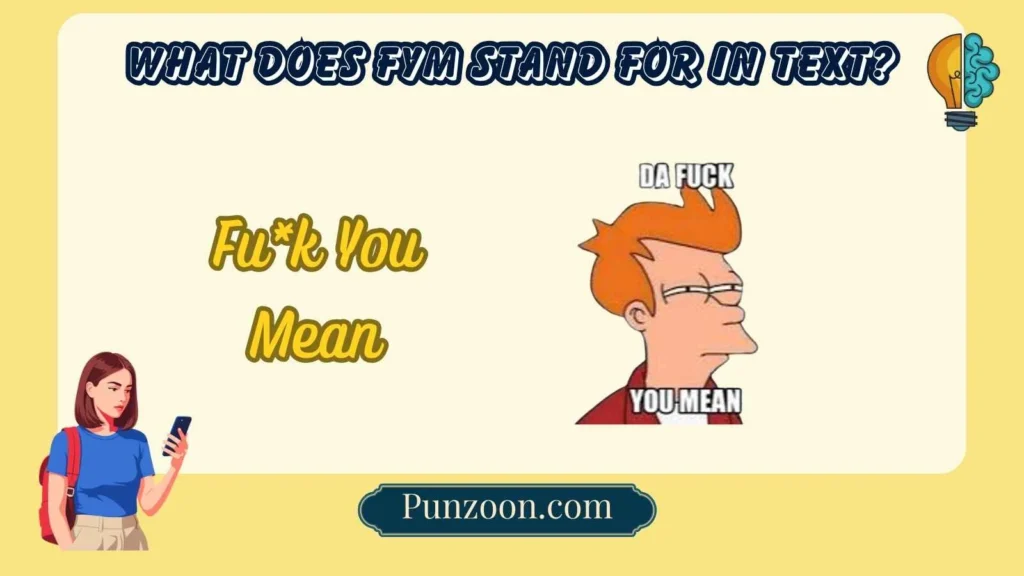
What Does FYM Stand For in Text is a question many people ask when they come across this acronym in chats or social media. Understanding what FYM means can help you communicate more clearly and avoid confusion in digital conversations. In this article, we’ll explain the meaning behind FYM and how it’s used in everyday texting.
If you’ve ever wondered what does FYM stand for in text, you’re not alone. This acronym can sometimes seem confusing or even rude without the right context. We’ll also explore when it’s appropriate to use FYM and what it really implies, so you can stay confident in your texting game.
What Does FYM Stand For in Text?
FYM is an acronym primarily used in informal texting and online messaging. It stands for “F* You Mean”** — a phrase people use to express confusion, disbelief, or to ask for clarification in a blunt or sometimes confrontational way.
Origins and Common Use
- Origin: FYM stems from casual slang popularized on social media platforms and text messaging.
- Usage: People use FYM to react when they don’t understand something or when they are skeptical about what was just said.
While its literal meaning contains profanity, many users employ it playfully or casually among friends without harsh intent.
Understanding the Tone: Is FYM Rude or Offensive?
Because FYM contains a strong expletive, it often carries a rude or confrontational tone. However, the level of offense depends heavily on:
- Context: Is it among close friends joking around or strangers in a heated argument?
- Tone: Sarcasm, humor, or genuine confusion can change how FYM feels.
When FYM is Offensive
- Used aggressively, it can come across as disrespectful or dismissive.
- In professional or formal settings, FYM is almost always inappropriate.
When FYM is Not Offensive
- Among friends with an established casual rapport, it can be playful or teasing.
- As shorthand in memes or jokes, the phrase loses much of its sharpness.
Casual vs. Confrontational Usage
🟢 Casual: Friendly or Playful
- FYM might be used when someone says something surprising or confusing in a joking manner.
- Example:
Friend 1: “I ate an entire pizza by myself.”
Friend 2: “FYM? No way!”
🔴 Confrontational: Sharp or Aggressive
- It becomes confrontational when the speaker intends to challenge or call out the other person.
- Example:
Person 1: “You’re late again.”
Person 2: “FYM? I told you I was stuck in traffic.”
Using FYM in Professional and Formal Settings
⚠️ Why FYM is a No-Go at Work
- Unprofessional: The profanity in FYM makes it unsuitable for business communication.
- Risky: Using FYM could harm your reputation or offend colleagues.
- Better to Avoid: Even if you’re close with coworkers, written messages are permanent and can be forwarded or misinterpreted.
When Should You Avoid Using FYM?
Avoid FYM in situations such as:
- Workplace chats or emails
- Communications with strangers or formal contacts
- Discussions where clarity and respect are crucial
- Cultural or age-diverse groups where slang might confuse or offend
Polite, Professional & Casual Alternatives to “FYM”
Choosing the right words can keep conversations clear and respectful. Here are 13 smart alternatives to FYM you can use depending on the tone you want:
| Alternative Phrase | Use Case | Example Sentence |
|---|---|---|
| I’m not sure I understand—can you explain? | Polite, professional | “I’m not sure I understand—can you explain?” |
| Wait, really? | Casual, surprised | “Wait, really? You finished already?” |
| That’s hard to believe! | Playful skepticism | “That’s hard to believe! Tell me more.” |
| What do you mean by that? | Clarification needed | “What do you mean by that? I’m confused.” |
| Sorry, I don’t follow. | Polite confusion | “Sorry, I don’t follow. Can you repeat that?” |
| Could you clarify that? | Formal request | “Could you clarify that statement?” |
| Are you serious right now? | Casual disbelief | “Are you serious right now? No way!” |
| You can’t be serious. | Playful disbelief | “You can’t be serious. That’s unbelievable!” |
| Huh? | Informal confusion | “Huh? What just happened?” |
| Come again? | Slightly humorous | “Come again? I didn’t get that.” |
| Wait—what? | Surprise, disbelief | “Wait—what? I thought you were joking!” |
| Hold on a second… | Asking to pause | “Hold on a second… let me check.” |
| I must’ve heard that wrong. | Polite doubt | “I must’ve heard that wrong. Can you repeat?” |
How Tone and Context Shape the Meaning of FYM
The tone and context radically change how FYM is perceived. Here’s why:
- Friendly tone: Makes FYM sound like teasing or playful banter.
- Serious tone: Makes it come off as aggressive or accusatory.
Examples of Tone Shift
| Context | FYM Usage Example | Perceived Tone |
|---|---|---|
| Text between close friends | FYM? That’s hilarious! | Playful, joking |
| Argument with a stranger | FYM? You’re lying. | Aggressive, confrontational |
| Social media meme | FYM? Me every Monday morning. | Humorous, relatable |
FYM in Pop Culture and Social Media
FYM often pops up in memes, viral tweets, and TikTok videos. It’s used to capture moments of disbelief or confusion quickly.
- Memes: Often exaggerate confusion or shock with FYM captions.
- Tweets: Users employ FYM to react to unbelievable news or jokes.
- Influencers: Sometimes use FYM to keep their tone casual and relatable.
This widespread usage helps FYM stay relevant in online conversations but also adds to its informal reputation.
Is There a Professional Version of FYM for Business Use?
Absolutely. To maintain professionalism while expressing surprise or asking for clarification, try these phrases:
- “Could you please clarify your point?”
- “I’m not sure I follow, can you elaborate?”
- “Could you explain that further?”
- “I’d appreciate more details on that.”
- “Please help me understand your perspective.”
These alternatives keep communication clear, respectful, and effective.
Summary Table for Quick Reference
| Aspect | Details |
|---|---|
| Meaning of FYM | “F*** You Mean” — expresses confusion or disbelief |
| Tone | Varies: playful among friends, confrontational otherwise |
| Casual Usage | Friendly teasing or informal banter |
| Confrontational Usage | Challenges or calls out others |
| Professional Usage | Not recommended due to profanity and tone |
| Alternatives | 13 polite & professional phrases provided |
| Pop Culture Presence | Common in memes, tweets, social media |
| Best Practice | Adapt language to audience and context |
FAQs:
What does FYM mean in text slang?
FYM means “F*** You Mean,” used to express confusion or disbelief.
Is FYM rude to use?
It can be rude or offensive because it includes profanity, especially in formal or unfamiliar settings.
Can FYM be used professionally?
No, it’s best avoided in professional or formal communication due to its informal and profane nature.
What are some polite alternatives to FYM?
Phrases like “Could you clarify that?” or “I’m not sure I understand” work well.
How can I tell if FYM is appropriate to use?
Consider your audience and context—if it’s casual and with friends, it might be fine; avoid it in professional or formal settings.
Final Thoughts:
Language is powerful, especially online. Using FYM might feel natural in casual chats but can backfire in formal or mixed-company settings.
Always consider who you’re talking to, what tone you want to convey, and whether a clearer, kinder phrase might work better.
Communicating clearly and respectfully wins every time. Remember: choosing the right words shapes how your message is received.