Last updated on January 28th, 2026 at 06:08 pm
What Does “Wyll” Mean in Text? is a trending question many people ask when they see this slang pop up in chats or social media. In today’s fast digital conversations, new expressions appear quickly, and understanding them helps you stay updated. This article breaks down what “Wyll” means, why people use it, and how it fits into modern online language.
If you’ve ever paused and wondered What Does “Wyll” Mean in Text?, you’re not alone. The term shows up everywhere, from TikTok to casual messaging, and its meaning can shift depending on context. Here, we’ll explain What Does “Wyll” Mean in Text? in a simple, friendly way so you can use it confidently in any conversation.
What Does “Wyll” Mean in Text?
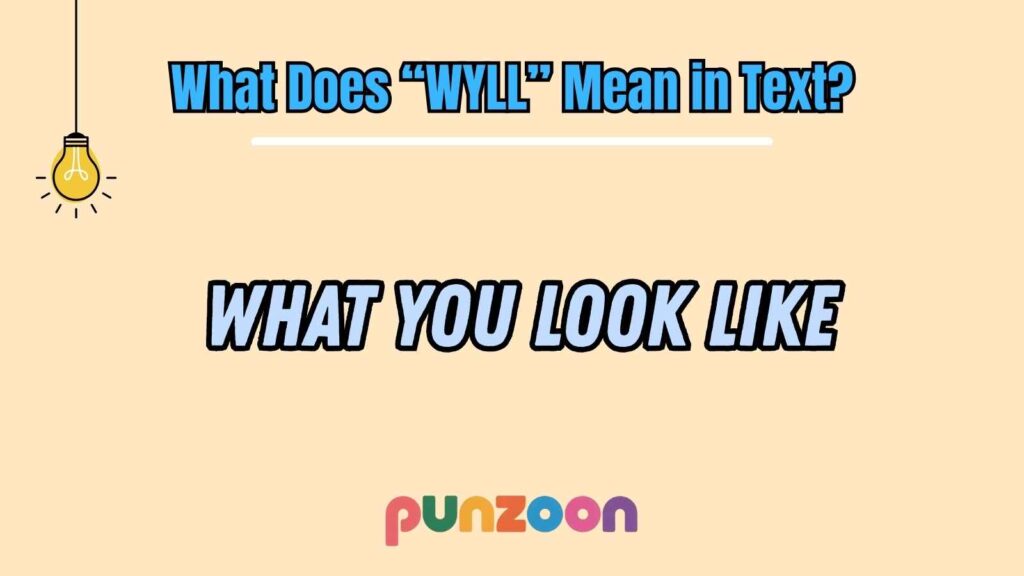
At its core, “Wyll” stands for “What You Look Like.” It’s a quick, casual way of asking someone about their appearance.
People use it when they want to know:
- Someone’s physical look
- What they’re wearing at the moment
- A description before an IRL meetup
- A selfie or picture
- Details that help identify them
You’ll see it often in:
- Snapchat
- Instagram DMs
- TikTok comments
- Online dating chats
- Discord servers
- Group texts with friends
In most cases, “Wyll” isn’t formal, deep, or complicated. It’s simply a visual request wrapped in a compact acronym.
Where Did “Wyll” Come From?
“Wyll” fits into a long tradition of texting shortcuts shaped by speed, convenience, and Gen Z culture. It emerged from the same digital ecosystem that birthed:
- Wyd (What you doing)
- Wya (Where you at)
- Hmu (Hit me up)
- Ight (Alright)
- Oml (Oh my lord)
As social platforms reward fast-paced messaging, acronyms become tools. The shorter the text, the quicker the connection.
A few forces pushed “Wyll” into mainstream use:
Snapchat’s Picture-Driven Communication
Since Snapchat relies heavily on selfies, the question “What you look like?” naturally shrank into something shorter—something users could toss into chats without breaking the flow.
TikTok’s Influence
Creators often caption videos with slang, dropping “Wyll” into comment sections. Once a term appears in a meme or viral clip, its adoption skyrockets.
The Rise of Visual Language
Modern messaging leans more on photos, emojis, and aesthetic expression. Asking about someone’s appearance with an acronym just fits the vibe.
What “Wyll” Really Implies in a Conversation
Even though “Wyll” literally means “what you look like,” its implication changes based on the situation. Tone isn’t just what’s typed—it’s how it’s delivered.
A simple “wyll?” could mean:
- curiosity
- attraction
- a request for a picture
- a practical question (“How do I find you?”)
- a playful nudge
- checking someone’s style or vibe
Texting is a bit like reading emotions through foggy glass. The meaning shifts depending on the sender, the timing, and the energy of the conversation.
Tone and Nuance Behind “Wyll”
Casual or Playful Tone
In casual chats between friends, “wyll” feels light. It doesn’t carry pressure or expectation. Instead, it acts like a quick check-in.
Example:
“We’re about to meet up at the food truck, wyll so I can spot you?”
Here, the acronym is purely functional.
Flirty, Curious, or Emotive Tone
This is where “wyll” thrives. It often pops up in chats where someone wants to know if there’s chemistry.
Common signs that the tone is flirty:
- added emojis (👀💗😉)
- a quick follow-up message
- compliments afterward
- nighttime texting
Example:
“Lol you’re cute, wyll? 👀”
In this context, “Wyll” becomes a door to attraction.
Trendy, Youth-Driven Usage
Teenagers and young adults use “Wyll” more than older generations. It signals social awareness and a familiarity with internet culture.
Some use it to subtly show they’re “in the loop.”
Others use it because it feels faster than typing the full phrase.
A Quick Note on Professionalism
Even though it’s expressive, “Wyll” looks unprofessional in formal settings.
Avoid it when messaging:
- coworkers
- clients
- supervisors
- teachers
- professional contacts
In these environments, clarity and respect matter more than speed.
Example of inappropriate use:
“Hey, before our meeting, wyll so I can find you?”
This feels immature and careless.
When You Should Avoid Using “Wyll”
There are moments when this acronym isn’t just inappropriate—it can feel rude or invasive.
Avoid using it when:
You Don’t Know the Person Well
Asking about someone’s appearance too early can feel intrusive.
The Conversation Is Professional
It can damage your credibility instantly.
The Context Is Emotionally Sensitive
Discussions about health, identity, or stress aren’t the right place for appearance-centered questions.
There’s a Big Age or Cultural Gap
Older generations may not recognize the term at all.
You Might Make Someone Uncomfortable
Not everyone likes being asked about their looks.
Polite, Professional, and Casual Alternatives to “Wyll”
Below is a useful table that shows alternatives based on context:
💼 Professional Alternatives
| Situation | Polite Phrase |
|---|---|
| Meeting someone at a work event | “How will I recognize you?” |
| Verification or ID check | “Could you share a photo for reference?” |
| Coordinating with a team | “Can you describe what you’re wearing today?” |
These phrases avoid slang and show maturity.
😊 Polite & Friendly Alternatives
| Tone | Example |
|---|---|
| Neutral | “What do you look like?” |
| Respectful | “Mind describing yourself?” |
| Social | “Do you have a picture you don’t mind sharing?” |
Use these with acquaintances or early-stage connections.
😄 Casual & Expressive Alternatives
These fit with friends, crushes, or fun chats:
- “Pic?”
- “Snap?”
- “Send a selfie?”
- “Got a snap?”
- “How you looking rn?”
These sound natural, fast, and engaging.
How to Choose the Best Alternative
Choosing the right phrase depends on a few variables.
Consider the Relationship Level
- Stranger → professional or neutral phrasing
- Friend → casual phrasing
- Crush → flirty phrasing
Think About the Platform
- Email: avoid slang
- Snapchat: slang is normal
- Instagram: depends on formality
- Dating app: playful works
Check the Mood of the Conversation
A soft, funny chat invites “wyll.” A serious conversation doesn’t.
Match the Other Person’s Energy
If they use slang, you can too.
If they sound formal, mirror that tone.
“Wyll” Compared to Similar Expressions
Many texting expressions overlap, but each carries its own nuance.
Here’s a breakdown:
| Expression | Meaning | Tone | Usage |
|---|---|---|---|
| “Wyll” | What you look like | Curious, flirty, playful | Wanting a description or selfie |
| “Pic?” | Send a picture | Direct, casual | Quick requests |
| “Send a snap” | Send a Snapchat photo | Fun, light | Close friends or crushes |
| “Wyd” | What you doing | Generic check-in | Anyone |
| “Wya” | Where you at | Location-focused | Meeting up |
Why “Wyll” stands out:
It narrows in on personal appearance, which makes it more intimate.
Emotional Subtext Behind “Wyll”
Messages often carry emotions that aren’t spelled out.
Curiosity
Sometimes it’s harmless curiosity—someone wants to visualize the person they’re chatting with.
Attraction
This is the most common subtext. If someone is flirting, “Wyll” becomes a key step.
Trust-Building
Sharing pictures can strengthen connection in early conversations.
Validation
Some use “Wyll?” as a subtle way to invite compliments or spark attention.
Vulnerability
Asking about appearance can feel bold, especially if someone fears rejection.
Real Examples of “Wyll” in Everyday Messaging
Here are real-world scenarios showing how “Wyll” works in natural conversation.
Friendly Chat
Alex: “We’re lining up outside the entrance.”
Jamie: “Wyll so I can find you?”
Why it works:
Informal. Friendly. Functional.
Flirty Conversation
Jay: “You seem fun lol.”
Mia: “Haha thanks 👀 wyll?”
Why it works:
The emoji makes the tone clear—curiosity with a dash of flirting.
Playful Group Chat
Sam: “Group selfie drop??”
Leo: “Wyll 😂 I wanna see everyone’s fits.”
Why it works:
Lighthearted and social.
Wrong Setting
Coworker: “Shared the file. Anything else?”
Employee: “Yeah wyll for the meeting today?”
Why it fails:
It feels childish and inappropriate for work.
Case Study: How “Wyll” Changes Chat Dynamics
Case Study 1: Early Dating App Chat
Two people matched on a dating app and chatted for 20 minutes. One asks:
“Lol wyll? 👀”
This moves the conversation from small talk to subtle flirtation. If both feel comfortable, it deepens the connection. If one feels pressured, it creates distance.
Insight:
“Wyll” accelerates intimacy quickly.
Case Study 2: Meeting a Friend for the First Time
Two mutual friends decide to hang out. One asks:
“Wyll so I can spot you at the café?”
Here, it’s practical—not personal.
Insight:
Context neutralizes the acronym.
Case Study 3: Workplace Miscommunication
A new intern messages:
“Hey I’m at the booth. Wyll?”
The supervisor reads it as rude and unprofessional.
Insight:
Slang loses meaning in formal settings and may come off immature.
Case Study: Tone Shift Based on Emoji
Same text, different vibe.
| Message | Tone |
|---|---|
| “Wyll?” | Neutral |
| “Wyll lol” | Playful |
| “Wyll? 👀” | Flirty |
| “Wyll??” | Impatient or eager |
| “Wyll 😭” | Dramatic, humorous |
Small changes = big emotional differences.
Why “Wyll” Matters in Today’s Digital Language
“Wyll” may look tiny, but its popularity reveals deeper communication trends.
1. Visual-first Communication
People often want pictures more than typed descriptions.
2. Rising Social Comfort with Selfies
Sharing one’s appearance is normalized today.
3. Faster Conversations
Short acronyms keep chats flowing.
4. Digital Identity
Slang like “Wyll” signals age, culture, and vibe.
5. Intimacy Building
Asking someone what they look like opens a personal door—something many crave in the digital world.
FAQs:
What does “Wyll” stand for?
It stands for “What You Look Like,” used to ask someone about their appearance or request a selfie.
Is “Wyll” flirty?
It can be. When paired with emojis or sent in a romantic context, it often signals attraction.
Should you use “Wyll” with strangers?
Use caution. It may feel intrusive or awkward if you haven’t built rapport yet.
Is “Wyll” appropriate at work?
No. It sounds immature and unprofessional in formal conversations.
What’s the best alternative to “Wyll”?
For casual chats: “Pic?”
For polite chats: “Mind sending a photo?”
For professional chats: “How will I recognize you?”
Conclusion:
Absolutely—when the context is right.
“Wyll” works beautifully in:
- casual chats
- playful banter
- flirty conversations
- social platforms that favor fast messaging
But it falls flat in:
- professional settings
- early introductions
- situations requiring respect or clarity
Like most slang, “Wyll” thrives when the vibe is warm, fun, and modern. Use it with people who speak the same digital language, and you’ll keep the conversation effortless and engaging.