Last updated on January 28th, 2026 at 06:01 pm
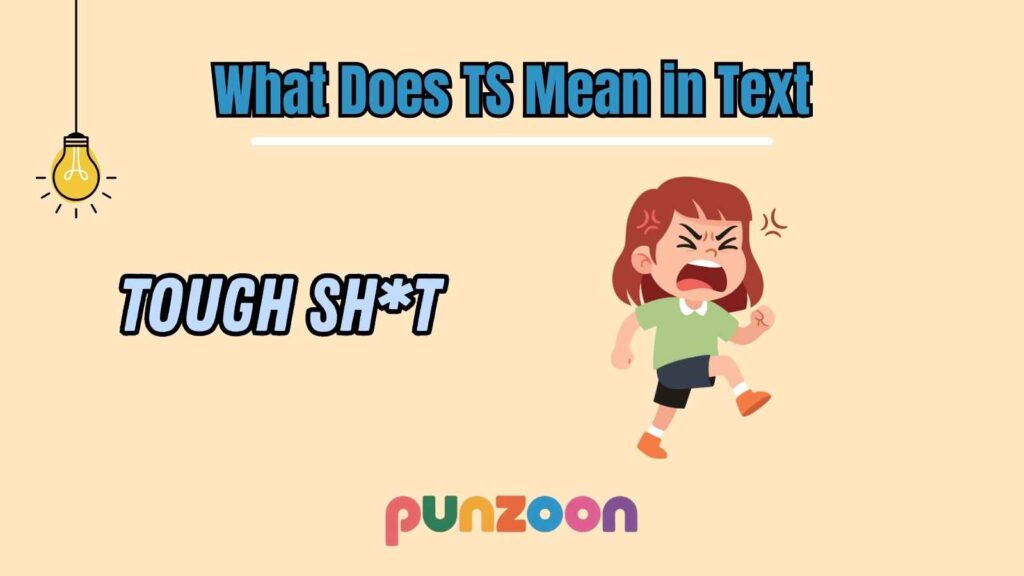
What Does TS Mean in Text is a phrase many people search when they come across this confusing abbreviation in chats or social media. In today’s fast-moving digital world, understanding TS can help you decode messages faster and avoid misunderstandings. This article breaks everything down in a friendly, simple way so you always know what the topic is about.
Whether you’re texting friends, browsing online communities, or reading trendy conversations, the term TS appears more than you might expect. By the end of this guide, you’ll clearly understand What Does TS Mean in Text, how TS is used, and why it matters in everyday communication. Let’s jump in and make texting easier!
What “TS” Means in Texting
The primary meaning of “TS” in text is “tough sh*t.”
It’s short, sharp, and usually comes across as dismissive or blunt. When someone uses it, they’re essentially saying:
“Deal with it. I don’t care.”
The phrase has been around for decades. But texting, gaming, and social media gave it new life because people love quicker, punchier ways to express frustration or indifference.
Quick facts:
- Origin: Military/lower-rank slang from the mid-20th century
- Tone: Blunt, dismissive, sometimes sarcastic
- Usage: Rarely polite and often context-sensitive
- Recipients: Usually friends, not strangers
Other Less Common Meanings of “TS”
While “tough sh*t” is the dominant meaning, people sometimes use “TS” to refer to other things depending on the context.
Possible Secondary Meanings:
| Abbreviation | Meaning | Where It Appears | Notes |
|---|---|---|---|
| TS | TeamSpeak | Gaming, voice chat | Popular on PC platforms |
| TS | Timestamp | Technical chats | Used in file logs or documentation |
| TS | Taylor Swift | Fandom communities | Depends heavily on audience |
| TS | transgender/ Trans | Gender identity discussions | Sensitive; avoid unless context is clear |
Most misunderstandings happen when someone outside the intended group sees the acronym and assumes the wrong meaning.
Is “TS” Rude or Offensive?
In most conversations, yes—it leans rude. Its blunt nature can easily be interpreted as:
- Dismissive
- Disrespectful
- Emotionally cold
- A conversation ender
Even when people use it jokingly, the phrase behind it is harsh enough to sting if the relationship isn’t close or comfortable.
People often take it as:
- “I don’t care about your problem.”
- “Stop complaining.”
- “Your feelings aren’t important.”
Tone matters, but because text lacks vocal cues, “TS” usually lands harder than intended.
When It Can Be Appropriate to Use “TS”
Despite its edge, “TS” isn’t always hostile. The phrase shows up naturally in relationships where sarcasm and playful banter are the norm.
Situations Where It Might Be Fine:
- Close friendships where mocking each other is routine
- Sibling chats (where “tough love” is common)
- Gaming trash-talk
- Group chats with dry humor
- Established inside jokes
In these situations, people already understand each other well enough to detect the humor behind the bluntness.
When You Should Never Use “TS”
Some conversations require respect and clarity. “TS” doesn’t deliver either.
Avoid using “TS” in:
- Workplace chats
- Emails of any kind
- Messages to clients or customers
- Disagreements where emotions run high
- Texts with older relatives who may misinterpret slang
- Cross-cultural conversations where bluntness varies widely
- Dating apps or early relationship chats
It’s not just rude — it can make you look unprofessional, insensitive, or immature.
Professional Alternatives to “TS”
Sometimes you need to push back without sounding disrespectful. These alternatives keep things firm yet polite.
Useful Professional Phrases:
- “I’m afraid that’s not possible.”
- “That’s beyond my control.”
- “I can’t change that, but I can help with…”
- “Here’s what we can do instead.”
- “Let’s focus on solutions.”
These options keep the conversation productive rather than confrontational.
Polite Alternatives to Say Instead of “TS”
When you want to stay friendly but still communicate boundaries, softer alternatives help.
Gentle, Polite Replacements:
- “Wish I could help, but I can’t.”
- “I get it, but that’s just how it is.”
- “I’m sorry, but my hands are tied.”
- “Not ideal, but we’ll make it work.”
- “That’s the situation for now.”
These keep the tone warm without losing honesty.
Casual Alternatives: Keeping It Light
Need something that fits a relaxed chat? These hit the sweet spot between playful and honest.
Lighthearted Alternatives:
- “Them’s the breaks!”
- “It be like that sometimes.”
- “That’s life.”
- “Can’t win ’em all.”
- “Rough deal, huh?”
They’re breezy, relatable, and far less sharp than “TS.”
Sarcastic Alternatives: Playfully Dismissive
Sometimes the situation calls for harmless sass.
Sarcastic-but-safer Replacements:
- “Cry me a river.”
- “Tragic.”
- “Thoughts and prayers.”
- “Rip to you, but I’m different.”
- “Sounds like a you-problem.”
Still snarky — but not explicitly crude.
Why Context Determines Everything
“TS” can sound hostile in one chat and hilarious in another. The difference usually comes from:
Key Context Clues:
- Relationship between sender and receiver
- Topic of conversation
- Earlier messages
- Emojis (or lack of them)
- Timing — fast replies seem less aggressive
- Punctuation
Look at these examples:
- “TS.” → Feels harsh and final
- “ts lol” → Reads playful
- “ts 😂” → Clearly joking
- “Well…ts” → Softens the blow
The smallest tweak can change the tone dramatically.
Cultural, Gender, and Age Sensitivity Around “TS”
Not everyone uses blunt language the same way.
Cultural factors:
- Some cultures value directness.
- Others expect tact and gentleness.
- “TS” usually lands worse in cultures that avoid confrontation.
Generational differences:
- Gen Z uses sarcasm more freely.
- Millennials lean toward polite alternatives.
- Older generations often see “TS” as flat-out rude.
Gender dynamics:
- Studies show women often soften tone for harmony.
- Men may use bluntness as banter.
This doesn’t apply universally, but awareness helps avoid misunderstandings.
Texting Etiquette: Avoiding “TS” on Social Media
Public spaces require extra care. Using “TS” in a comment thread or reply can escalate drama instantly.
Why it’s risky:
- Strangers can’t read your tone
- Screenshots can spread
- It makes you look hostile
- It invites arguments
- It can harm your reputation
Safer alternatives keep conversations civil and constructive.
How to Choose the Best Alternative: A Quick Guide
Use this simple decision table when you want to say something like “TS” but don’t want to burn bridges.
Choosing Your Phrase
| Situation | Best Tone | Safe Alternative |
|---|---|---|
| Workplace | Professional | “That’s outside my control.” |
| Casual friend chat | Light | “It be like that sometimes.” |
| Close friend sarcasm | Snarky | “Cry me a river.” |
| Sensitive discussion | Gentle | “I understand, but I can’t change it.” |
| Social media | Neutral | “That’s how it works, unfortunately.” |
Quick, clean, and easy to apply.
Common Misinterpretations of “TS”
Here are the misunderstandings that pop up most often:
Frequent Confusions
- Someone thinks it means “TeamSpeak”
- Someone thinks the sender is angry
- Someone reads it literally instead of sarcastically
- Someone thinks the person is ignoring them
- Someone assumes hostility when none was intended
Most of these happen because text lacks vocal tone or facial expressions.
Why Replacing “TS” Usually Works Better
It’s rarely the phrase itself—it’s the emotional weight behind it. Choosing a thoughtful alternative prevents:
- Miscommunication
- Hurt feelings
- Escalating arguments
- Damaged relationships
- Unnecessary tension
Polite doesn’t mean weak. It means smart.
Emotional Intelligence in Texting
When you show empathy—even briefly—you communicate maturity and respect.
EI in action:
- You acknowledge feelings
- You keep your message clear
- You reduce tension
- You protect relationships
- You make conversations smoother
For example:
Instead of: “TS.”
Try: “I know it’s frustrating, but I can’t change that.”
Same message. Better outcome.
25 Alternatives to “TS” You Can Use Right Now
Below are practical examples split by tone.
Professional
- “That’s not something I can adjust.”
- “This is the current policy.”
- “Let’s work within what we have.”
- “The situation is fixed for now.”
- “I’ll help with what I can control.”
Polite
- “I know it’s annoying, but it is what it is.”
- “Wish I could change it.”
- “Sorry, but that’s the setup.”
- “Not ideal, but here we are.”
- “We’ll make it work.”
Casual
- “Life’s wild like that.”
- “Happens to the best of us.”
- “Tough break.”
- “That’s how the cookie crumbles.”
- “Can’t do much about it.”
Humorous
- “Welcome to planet Earth.”
- “Add it to the list of tragedies.”
- “The universe said no.”
- “Big oof.”
- “That’s a plot twist.”
Sarcastic but safe
- “Rip to you.”
- “Tragic story.”
- “Send flowers.”
- “A moment of silence.”
- “Sounds like a personal crisis.”
Case Studies: How “TS” Can Change a Conversation
Case Study 1: The Friend Chat
Situation:
Alex complains about losing a game.
Jordan replies: “TS lol.”
Result:
Alex laughs. No harm done.
Why it works:
They already joke this way.
Case Study 2: The Workplace DM
Employee: “This software keeps crashing.”
Supervisor: “TS.”
Result:
Employee feels unheard and disrespected.
Why it fails:
Professional conversations need tact.
Case Study 3: The Relationship Text
Partner A: “I’m really overwhelmed.”
Partner B: “TS.”
Result:
The relationship takes damage.
Why it fails:
Lack of emotional support.
Case Study 4: The Sibling Exchange
Sibling 1: “You finished the last snack?”
Sibling 2: “TS 😭”
Result:
Both laugh.
Why it works:
Humor softens the bluntness.
Case Study 5: The Social Media Comment
User: “This update ruined everything.”
Reply: “TS.”
Result:
Arguments explode.
Why it fails:
Public spaces magnify tone.
FAQs:
What does “TS” mean in text?
It almost always means “tough sh*t,” a blunt way of saying “deal with it.”
Is “TS” rude?
Usually yes. It can sound harsh or dismissive unless used jokingly among close friends.
Can I use “TS” in professional messages?
Avoid it entirely. Choose polite or neutral alternatives that maintain professionalism.
What’s a friendly way to say “TS”?
Try “It is what it is,” “Wish I could help,” or “Not much we can do.”
Why do people misunderstand “TS”?
Context changes meaning, and text lacks tone. Different groups interpret slang differently.
Conclusion:
The phrase behind “TS” might be short, but it carries a heavy emotional punch. While friends with sarcastic humor can get away with using it, most conversations—especially online—go smoother when you choose a more thoughtful alternative.
At the end of the day, respect, clarity, and emotional intelligence always communicate your point better than a blunt acronym ever will.