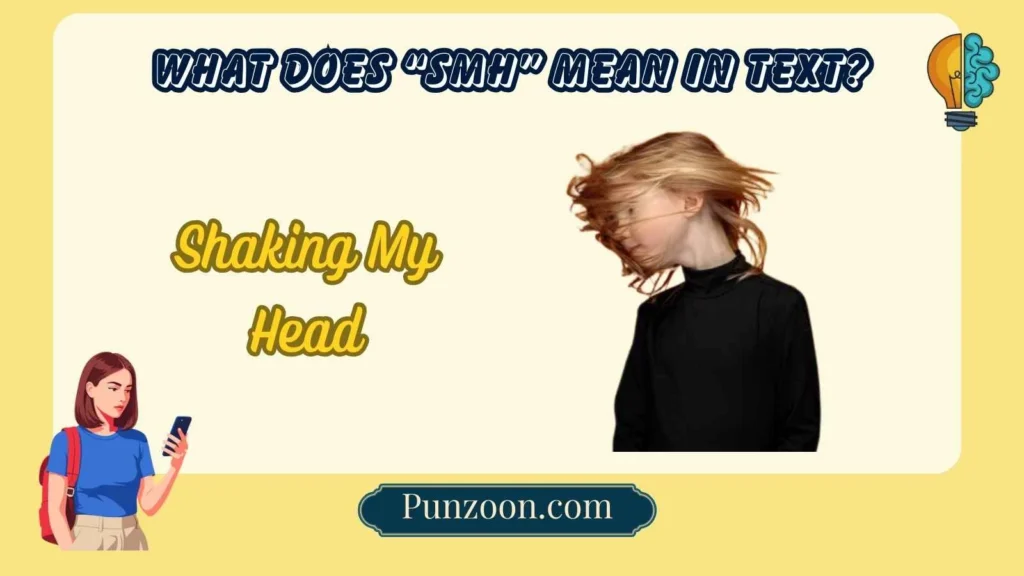
What Does “SMH” Mean in Text? If you’ve ever seen this short phrase in a chat, comment, or social media post and felt confused, you’re not alone. What Does “SMH” Mean in Text? is one of the most searched slang questions today because it shows up everywhere in digital conversations. This popular abbreviation is often used to quickly express disappointment, disbelief, or frustration.
What Does “SMH” Mean in Text? Simply put, it stands for Shaking My Head, and it’s used when words aren’t enough to react to something silly or annoying. In this guide, you’ll clearly understand what SMH means in text, how people use it, and the real tone behind it so you can use it naturally and confidently in everyday messaging.
What Does “SMH” Mean in Text?
SMH stands for Shaking My Head.
In texting and online communication, it represents a nonverbal reaction—the digital version of physically shaking your head in disbelief, disappointment, or mild frustration.
At its core, SMH signals that something feels:
- Unnecessary
- Disappointing
- Obvious
- Hard to believe
It’s not usually explosive anger. Instead, it’s a quiet judgment. A sigh without words.
Common examples:
- Someone repeats a mistake → SMH
- A bad take appears online → SMH
- A friend ignores obvious advice → smh
Capitalization matters. SMH feels stronger. smh feels more casual or resigned.
The Real Meaning Behind SMH (Context Changes Everything)
The meaning of SMH in text depends almost entirely on context.
The same three letters can express different emotions depending on the situation, relationship, and timing.
Emotional meanings SMH can carry:
- Mild disappointment
- Disbelief
- Secondhand embarrassment
- Silent criticism
- Playful frustration
Why SMH often feels passive-aggressive
SMH doesn’t explain why something is wrong. It assumes the other person should already know. That’s why it can feel dismissive or judgmental.
“SMH doesn’t invite discussion. It closes the door.”
Without tone, facial cues, or voice, the reader fills in the blanks—and usually assumes the worst.
Origins and Evolution of SMH
Where SMH started
SMH originated in early internet chatrooms and forums in the late 1990s and early 2000s. Users needed quick ways to express reactions without typing full sentences.
How it evolved
Over time, SMH moved from:
- Forums → instant messaging
- Instant messaging → texting
- Texting → social media and memes
What started as a literal description became an emotional shortcut.
Then vs now
| Era | Usage Style | Meaning |
|---|---|---|
| Early internet | Literal reaction | Disbelief |
| Texting era | Emotional shorthand | Disappointment |
| Social media | Reaction meme | Judgment or humor |
Today, SMH is less about movement and more about social commentary.
How SMH Is Used in Everyday Texting
SMH appears in different forms depending on how much effort the sender wants to invest.
Standalone use
- “SMH”
- “smh”
This is the strongest form. No explanation. Just judgment.
Sentence-based use
- “You really did that, SMH.”
- “SMH at this whole situation.”
This softens the blow slightly by adding context.
Group chats
In group settings, SMH often performs social alignment—signaling agreement with the majority without elaboration.
Comment sections
On social platforms, SMH becomes performative. It tells others, “I see this, and I disapprove.”
Tone and Emotional Weight of SMH
Tone isn’t just about words. With SMH, small details change everything.
Factors that affect tone:
- Capitalization
- Emojis
- Punctuation
- Timing
Tone variations
| Version | Tone |
|---|---|
| SMH | Strong judgment |
| smh | Casual disappointment |
| smh 😂 | Playful teasing |
| SMH… | Silent frustration |
| smh 🤦♀️ | Emphasized disbelief |
Used carefully, SMH can be humorous. Used poorly, it can escalate conflict fast.
The Psychology Behind Using SMH
Why do people choose SMH instead of explaining themselves?
Psychological reasons:
- Emotional efficiency – It’s faster than explaining frustration
- Conflict avoidance – It expresses disapproval without confrontation
- Social signaling – Shows moral or intellectual distance
- Cognitive overload – People don’t want to engage deeply
SMH lets people react without responsibility. That’s powerful—and risky.
Why Understanding SMH Matters in Communication
Misreading SMH can damage relationships, especially in text-only environments.
Why it matters:
- Prevents unnecessary arguments
- Improves emotional intelligence
- Reduces miscommunication
- Builds digital empathy
If you understand what SMH means in text, you’re less likely to take it personally—and more likely to respond wisely.
SMH vs Similar Text Acronyms
SMH often gets confused with other reaction acronyms. They are not the same.
| Acronym | Meaning | Emotional Tone |
|---|---|---|
| SMH | Shaking My Head | Disappointment |
| LOL | Laughing Out Loud | Amusement |
| WTF | What The F | Shock or anger |
| IDK | I Don’t Know | Neutral uncertainty |
| BRUH | Exasperation | Disbelief or annoyance |
SMH sits in the middle—less aggressive than WTF, more judgmental than LOL.
13 Better Alternatives or Responses to SMH (With Real Use Cases)
Sometimes SMH isn’t the best choice. Here are smarter, clearer options.
Professional or Polite Alternatives
- “That’s unfortunate.”
- “I don’t agree with that approach.”
- “That may need reconsideration.”
- “Let’s revisit this.”
- “I see an issue here.”
Use case: Work chats, emails, professional Slack conversations.
Casual and Friendly Alternatives
- “Yikes.”
- “Oof.”
- “That’s rough.”
- “Come on now.”
- “Seriously?”
Use case: Friends, family, relaxed group chats.
Sarcastic or Humorous Replies
- “Bold choice.”
- “Interesting decision.”
- “And we’re surprised?”
- “Classic.”
- “Well… that happened.”
Use case: Close friends, meme culture, light teasing.
How to Choose the Right Alternative to SMH
Before typing SMH, pause for two seconds.
Ask yourself:
- Who’s reading this?
- Where is this being posted?
- How emotional is the moment?
- Do I want clarity or distance?
Quick decision table:
| Situation | Best Choice |
|---|---|
| Work chat | Polite alternative |
| Friend mistake | Casual wording |
| Public comment | Clear explanation |
| High emotion | Avoid SMH |
When You Should NOT Use SMH
SMH can backfire in certain situations.
Avoid SMH when:
- Someone is emotionally vulnerable
- The topic is serious or sensitive
- Professional clarity is required
- You actually want dialogue
Silence or clarity often works better than a dismissive reaction.
SMH in Memes, Social Media, and Pop Culture
SMH exploded in popularity through memes.
Why memes love SMH:
- It’s instantly relatable
- It requires no explanation
- It exaggerates shared frustration
Platforms like X, Instagram, and TikTok use SMH as a reaction label, not a response.
Generational note:
- Younger users use SMH humorously
- Older users read it more literally
That gap causes frequent misunderstandings.
The Linguistic Role of SMH in Modern Language
SMH functions as digital body language.
It replaces:
- Eye rolls
- Sighs
- Head shakes
Linguistically, SMH is a paralinguistic marker—a word that communicates emotion rather than information.
That’s why it feels powerful despite being short.
FAQs:
What does SMH mean in texting?
SMH means Shaking My Head, used to express disappointment, disbelief, or mild frustration.
Is SMH rude?
It can be. Without context, SMH often feels dismissive or judgmental.
Is SMH always negative?
Mostly, yes. But tone, emojis, and relationships can soften it.
Should I use SMH at work?
Avoid it. Professional settings require clarity and respect.
What’s better than SMH in conversations?
Clear words. Short explanations often work better than reactions.
Conclusion:
Understanding what SMH means in text goes far beyond knowing the acronym. It’s about tone, intent, psychology, and context.
SMH is powerful because it says little—but implies a lot. Used carefully, it can be humorous or relatable. Used thoughtlessly, it can shut conversations down.
In a world driven by digital communication, clarity beats cleverness. When in doubt, say what you mean. Your message—and your relationships—will be stronger for it.