Last updated on January 28th, 2026 at 06:04 pm
What Does ISTG Mean in Text is a phrase many people search for when they see this slang pop up in chats and want quick clarity. In today’s fast messaging culture, ISTG shows up everywhere, and understanding it helps you keep up with online conversations. This article breaks down the meaning, tone, and usage so you never feel confused again.
What Does ISTG Mean in Text also matters because it can express strong emotion, honesty, or even frustration depending on how it’s used. By knowing when and how to use ISTG, you’ll become more confident in texting and social interactions. Keep reading as we explain What Does ISTG Mean in Text in the simplest, most helpful way.
What Does ISTG Mean in Text? (Meaning & Full Breakdown)
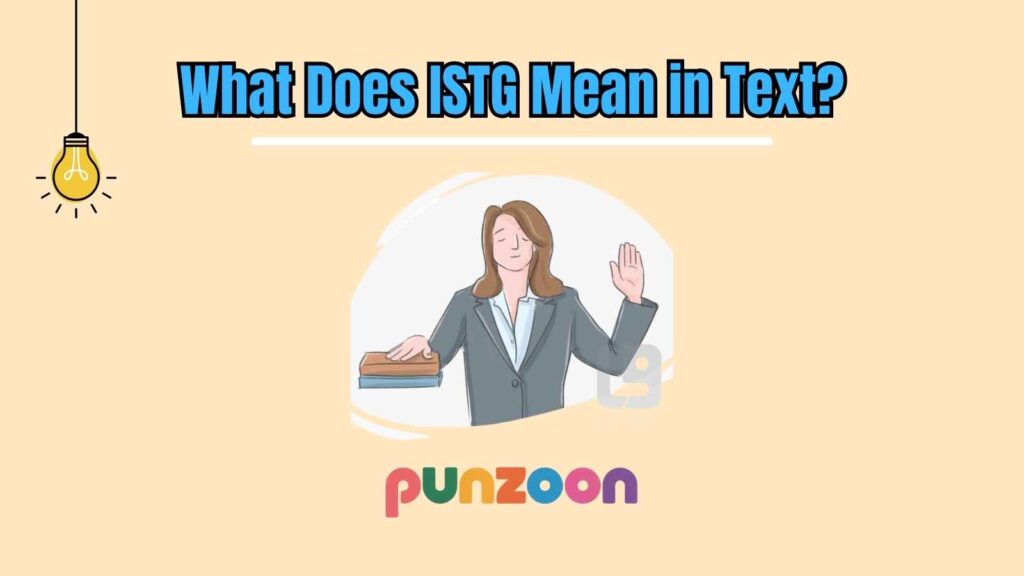
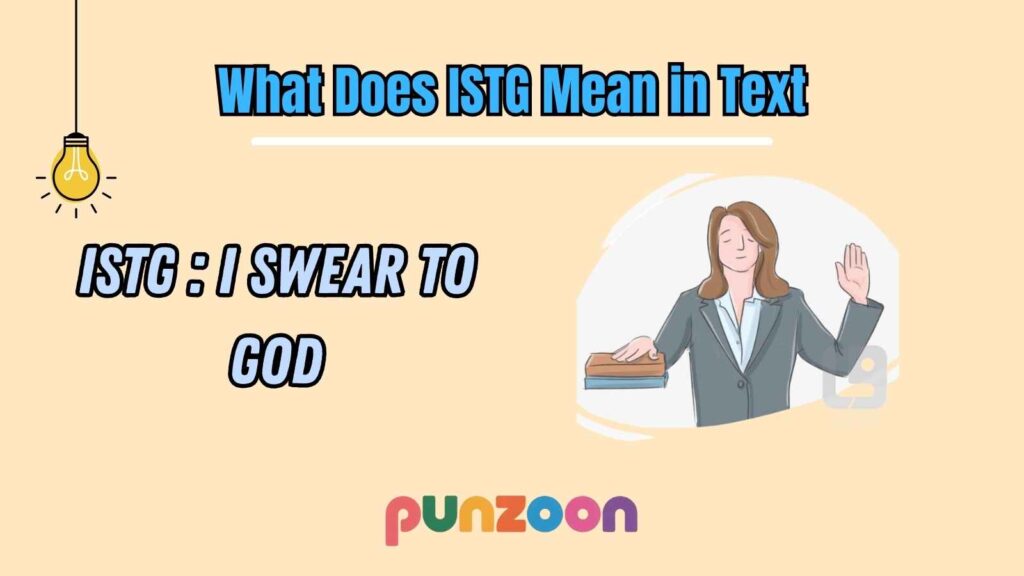
Let’s start with the foundation. ISTG stands for “I swear to God.”
People use it to emphasize a point, express frustration, show honesty, or add emotional weight to whatever they’re saying.
While the original phrase carried religious seriousness, the acronym often feels much lighter—almost casual—depending on who’s using it. Teens may drop istg ten times a day without thinking twice, while adults might still interpret it through its literal meaning.
Here’s how the meaning shifts based on style:
| Version | Meaning | Tone |
|---|---|---|
| ISTG | I swear to God | Strong, intense, emotional |
| istg | Same meaning | Casual, playful, low-stakes |
| ISTG! | Emphasis | Frustration or urgency |
| istg bro / istg fr | Enhanced emphasis | Dramatic or humorous |
The acronym has become a flexible tool. Sometimes it shows honesty. Other times sarcasm. And occasionally, pure exasperation.
Real Examples of How ISTG Is Used in Text
Because tone transforms meaning, let’s look at real conversational scenarios. You’ll see how context drives everything.
Serious or Honest Tone
- “ISTG I didn’t touch your charger. Check your bag.”
- “I’m telling you, istg I saw him at the mall earlier.”
Here, ISTG strengthens honesty.
Frustrated Tone
- “ISTG if he texts me one more time…”
- “istg this app keeps crashing and I’m over it.”
This version adds emotional heat.
Playful or Sarcastic Tone
- “ISTG you’re the worst for eating my fries 😂”
- “istg bro, you always dramatic for no reason.”
Sarcasm wrapped in humor.
Reassuring Tone
- “I’m fine, istg. Just tired.”
- “I didn’t mean it like that, istg.”
Tone softens here, signaling reassurance.
Case Study: Mixed Tone Confusion
A teen texts their parent:
“ISTG I didn’t skip school.”
The parent interprets it literally → defensive, disrespectful
The teen intended → emphasis, not religious weight
Lesson: ISTG’s meaning depends heavily on the relationship between sender and receiver.
Hidden Meaning: Tone, Emotion, and Intent Behind ISTG
ISTG lives in the gray zones of emotion. It’s not just an acronym; it’s a social signal. Understanding its deeper layers will help you read people better and respond more naturally.
1. Emphasis
When someone wants you to truly believe them, ISTG becomes a verbal underline.
2. Honesty Marker
Some people use ISTG instead of:
- “Seriously”
- “For real”
- “Honestly”
3. Emotional Frustration
It’s a pressure valve when someone feels annoyed or overwhelmed.
4. Dramatic Flair
Teens often use ISTG to express exaggerated emotion for comedic effect.
5. Relational Communication
Tone shifts depending on the closeness of the people involved:
- Close friends → playful
- Siblings → annoyed
- Parent/child → defensive
- Strangers → potentially rude
Quote Example
“ISTG is one of those phrases where tone is everything. Without it, the message becomes a guessing game.”
Why Understanding ISTG Matters (More Than You Think)
Words shape relationships. Even in texting.
Here’s why learning the true meaning and tone of ISTG actually matters:
1. Prevent Miscommunication
A message like
“ISTG you never listen”
can feel like a small argument if used in the wrong context.
2. Cultural Sensitivity
Some people see “I swear to God” as casual. Others consider it sacred or offensive.
3. Generational Divide
- Teens → slang, playful, not literal
- Adults → more serious, literal
- Older adults → potentially disrespectful
Understanding this gap keeps conversations smooth.
4. Emotional Accuracy
Choosing the right phrase avoids accidental drama.
5. Building Digital Literacy
Online communication relies on tone markers. ISTG is one of them.
Best Alternatives to ISTG (With Tone & Usage Notes)
Sometimes ISTG fits. Sometimes it doesn’t. Below are nuanced alternatives grouped by tone and emotion so you can choose the right one every time.
Serious & Honest Alternatives
These convey genuine sincerity without the dramatic tone.
• “I promise you”
For reassurance in emotional conversations.
• “I’m being completely honest”
More transparent and direct.
• “In all seriousness”
Gentle transition into honesty.
• “I’m telling the truth”
Straightforward and clear.
• “That’s the honest truth”
Adds gravitas without sounding harsh.
Casual & Modern Slang Alternatives
Perfect for texting friends.
• “No cap”
Trendy, youthful, confident.
• “For real”
Works in almost every situation.
• “Honestly”
Soft but sincere.
• “I mean it”
Useful for gentle emphasis.
• “Cross my heart”
Old-school charm with soft sincerity.
Empathetic or Reassuring Alternatives
Good when someone might feel insecure or doubtful.
• “You have to believe me”
Emotionally connective.
• “I wouldn’t lie to you”
Strong reassurance in sensitive moments.
Dramatic or Playful Alternatives
These add flavor without going overboard.
• “Fr fr”
Short for “for real, for real.” Intensifies honesty.
• “Dead serious”
More modern than ISTG and less religious.
How to Choose the Right Alternative (Context Guide)
Choosing the right phrase depends on more than just the words. It depends on the relationship, platform, emotion, and culture.
Here’s a simple decision guide:
Audience Awareness
Different people interpret ISTG differently:
- Friends → casual, normal
- Parents → dramatic, maybe disrespectful
- Coworkers → unprofessional
- Older people → potentially offensive
Intent & Emotion
Ask yourself:
- Am I trying to reassure someone?
- Am I emotional or frustrated?
- Do I want to sound playful?
- Do I need to soften the tone?
Your intent decides the phrase.
Medium of Communication
Text Messages
ISTG is most common here.
Group Chats
Tone can be misunderstood without context.
Social Media Posts
Usually playful.
Work Emails or School Communication
Avoid completely. Use:
- “To clarify…”
- “I want to be clear…”
- “From my perspective…”
Cultural & Religious Sensitivity
Because ISTG literally references God, it may feel heavy or inappropriate for certain groups.
If unsure, switch to:
- “Honestly”
- “I promise”
- “For real”
Polite & Professional Alternatives to ISTG
Using ISTG in professional settings can come across as dramatic or immature. Instead, try:
- “I want to clarify…”
- “To be transparent…”
- “I can confirm that…”
- “From my understanding…”
- “To the best of my knowledge…”
These phrases preserve respect and clarity.
Example
Instead of
“ISTG I sent the file yesterday.”
say:
“Just confirming that I sent the file yesterday. Let me know if you need it again.”
Casual & Friendly Alternatives for Everyday Chats
When texting friends, you don’t need formality. Use something lighter:
- “Dude, for real.”
- “I swearrr I’m not lying 😂”
- “Frfr I mean it.”
- “Honestly, I’m telling you the truth.”
- “Trust me on this one.”
These keep conversations fun without sounding intense.
When NOT to Use ISTG (Important Situations)
ISTG isn’t bad slang, but it can backfire.
Avoid using it in these situations:
1. During Arguments
It can escalate tension.
2. With People Who Are Religious
They may take the phrase seriously.
3. In Professional Communication
It feels informal and emotional.
4. When Someone Is Already Upset
It can come across defensive.
5. When You’re Unsure of Tone Compatibility
Better to stay safe with:
- “Honestly”
- “I promise”
Quick Reference Table
| Scenario | Best Phrase | Why It Works |
|---|---|---|
| Professional message | “To clarify…” | Polite and formal |
| Reassuring someone | “I promise” | Builds trust |
| Casual chat | “For real” | Friendly and natural |
| Playful banter | “Fr fr” | Youthful and fun |
| Serious honesty | “I’m being completely honest” | Direct and sincere |
FAQs :
What does ISTG mean in text?
It means “I swear to God”, and it’s used to show emphasis, honesty, or strong emotion.
Is ISTG rude?
It depends on tone and audience. Some people find it casual; others find it dramatic or disrespectful.
Is ISTG appropriate for school or work?
Not really. It’s considered slang and can feel unprofessional.
Why do people type ISTG in all caps?
All caps adds emotional intensity—frustration, urgency, or emphasis.
Is ISTG the same as “no cap”?
Not exactly. “No cap” means “I’m not lying,” while ISTG carries emotional weight or intensity.
Conclusion:
ISTG is a powerful acronym—simple, expressive, and packed with emotional nuance.
But like any tool, it works best when used thoughtfully.
Understanding the tone, context, and relationship behind it helps you communicate clearly and respectfully.
Whether you choose ISTG, “for real,” “I promise,” or something more formal, the key is knowing what fits the moment.