The Core Meaning of “…” in Text is often misunderstood but holds significant value in modern communication. Whether in casual chats or serious messages, these three dots carry emotions and intent beyond just a pause. Understanding The Core Meaning of “…” in Text helps decode hidden feelings and tones that words alone may not express.
Many people use “…” without realizing the deeper message they send. Exploring The Core Meaning of “…” in Text reveals how context changes its impact—from hesitation to suspense or even sarcasm. By grasping this core meaning, you’ll communicate more clearly and connect better with others.
The Core Meaning of “…” in Text
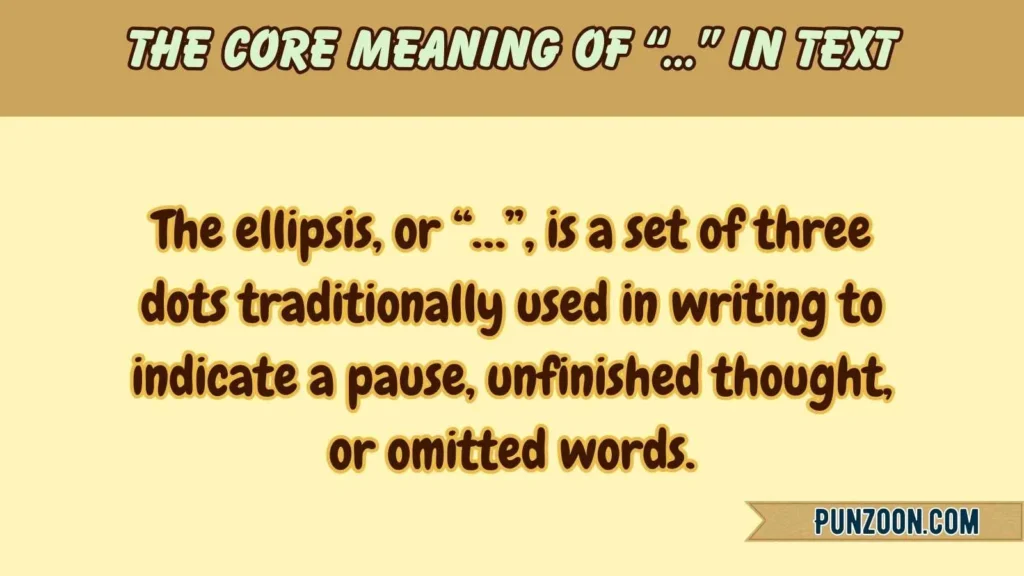
The ellipsis, or “…”, is a set of three dots traditionally used in writing to indicate a pause, unfinished thought, or omitted words. In text messaging, it takes on new life—often signaling hesitation, suspense, or emotional subtext without a single explicit word.
Unlike formal writing where ellipsis is purely grammatical, in texting, it conveys tone. It can suggest that the sender is thinking, unsure, or leaving something unsaid deliberately.
Why Does It Matter?
Understanding this subtle cue can help you avoid miscommunication. For example, a message ending in “I guess…” might mean uncertainty, frustration, or even a gentle prompt for you to respond. The meaning often shifts based on the relationship and context.
Emotional Contexts Behind “…” in Text Messages
The ellipsis can wear many emotional hats. Here’s what it might mean depending on the mood:
Uncertainty or Hesitation
When someone writes “I’m not sure about that…”, the ellipsis often reflects pause or doubt. It shows the sender is carefully weighing words or reluctant to fully commit.
Example:
“Do you want to come over later…” might imply the person is unsure or afraid of rejection.
Disappointment or Sadness
Ellipsis can soften the blow of disappointment, showing quiet sadness or resignation. It’s a way to express feelings without sounding confrontational.
Example:
“I thought you’d be here by now…” implies sadness or letdown, even if it sounds casual.
Anger in Disguise
Sometimes, “…” hides frustration or passive-aggressiveness. It’s a subtle way of showing irritation without overt conflict.
Spotting anger:
- Short, clipped messages followed by “…”
- Silence that speaks louder than words
Leaving Room for Response
Using “…” invites the receiver to fill in the gap or respond. It signals openness or uncertainty about what’s next.
Example:
“Well…” can mean “I’m waiting for you to say something.”
Emotional Vulnerability
Ellipsis may reveal a person’s hesitance to fully express feelings—maybe fear of judgment or emotional exposure. It’s a soft way of opening up.
How Tone, Relationship & Context Affect Meaning
Who sends the “…” and in what relationship context dramatically changes its interpretation.
From a Crush or Romantic Interest
In romantic chats, “…” can be playful or flirty, signaling teasing or hesitation to express feelings outright. It can be a way to test the waters without risking too much vulnerability.
From a Friend
Among friends, it’s often casual—indicating playful suspense, mild confusion, or waiting for an answer. Sometimes it’s just a friendly nudge or space for empathy.
From a Coworker or Professional Acquaintance
Here, “…” usually signals professionalism, politeness, or a careful way to soften messages in sensitive discussions. It may also indicate something left unsaid due to workplace boundaries.
15 Effective Reply Examples to “…” in Text
Responding to “…” depends on tone and relationship. Here are 15 ways to reply, with examples:
| Response Style | Example Reply | When to Use |
|---|---|---|
| Playful Curiosity | “What’s on your mind? 😊” | Flirty or casual conversations |
| Supportive and Empathetic | “I’m here if you want to talk.” | Sad or vulnerable moments |
| Straightforward and Clear | “Can you explain what you mean?” | Confusing or unclear ellipsis |
| Light Flirtation | “You’re making me curious…” | Romantic interest |
| Reassuring and Kind | “No worries, take your time.” | Hesitant or uncertain sender |
| Sincere and Direct | “I appreciate your honesty.” | Serious or emotional conversations |
| Humorous Tease | “You’re being mysterious!” | Friendly banter |
| Observant and Reflective | “Sounds like something’s bothering you.” | Emotional vulnerability |
| Challenging but Respectful | “Come on, spill it!” | Close relationships where teasing is okay |
| Encouraging Honesty | “Feel free to be upfront with me.” | Building trust |
| Casual Light-Hearted | “Okay, I’m waiting…” | Easygoing chats |
| Assertive Response | “Please say what you mean.” | When clarity is essential |
| Gentle Prompt | “Anything you want to add?” | Encouraging continuation |
| Romantic Sensitivity | “I’m listening… don’t hold back.” | Deepening emotional connection |
| Clarification Invitation | “Not sure I follow, can you explain?” | Confused or ambiguous messages |
Choosing the Right Response: Using Tone & Intuition
Before replying to “…”, consider these factors:
- Sender’s mood: Are they upset, playful, or uncertain?
- Relationship closeness: Casual friend vs. romantic interest vs. coworker
- Context of conversation: Serious topic or lighthearted chat?
Tips:
- If unsure, ask for clarification gently rather than assuming.
- Match the tone—if it’s playful, respond lightly; if serious, be empathetic.
- Sometimes, giving space without immediate reply works best.
Alternative Phrases That Convey Similar Meanings as “…”
Ellipsis isn’t the only way to show hesitation, pause, or emotion in text. Here are some alternatives and how they compare:
| Phrase/Punctuation | Meaning/Usage | Tone Example |
|---|---|---|
| “Hmm” | Thinking or doubt | “Hmm, not sure about that.” |
| “Okay…” | Hesitation or reluctant agreement | “Okay… I’ll think about it.” |
| “…” (with fewer/more dots) | Similar but can signal longer pause | “I don’t know….” |
| “?” | Request for clarification | “Are you coming?” |
| “!!” | Excitement or urgency | “Really?!!” |
| “—” (dash) | Sudden interruption or trailing off | “I was going to say—” |
FAQs:
What does “…” usually mean in text messages?
It generally shows hesitation, a pause, or something left unsaid, depending on the context.
Can “…” indicate anger in texting?
Yes, it can mask irritation or passive-aggressiveness if used with short or clipped messages.
How should I respond to a text ending with “…”?
Consider the tone and relationship; you might ask for clarification, show empathy, or respond playfully.
Is “…” always negative in texting?
No, it can also express teasing, playfulness, or invite conversation.
Does the sender’s relationship to me affect the meaning of “…”?
Absolutely; a romantic interest, friend, or coworker will use it differently based on the relationship.
Conclusion:
The humble ellipsis “…” packs a punch far beyond its three dots. It conveys hesitation, emotion, and nuanced meanings that shift dramatically with context, tone, and relationships.
By paying attention to how and why someone uses “…”, you unlock richer communication and avoid misunderstandings.
Whether it’s a subtle sign of vulnerability, a playful tease, or a silent invitation, mastering the interpretation of “…” helps you connect better in the fast-moving world of text.